august 2026 • edition 01
THE STANDARD: ARCHIVES
News • Highlights • Updates • Development
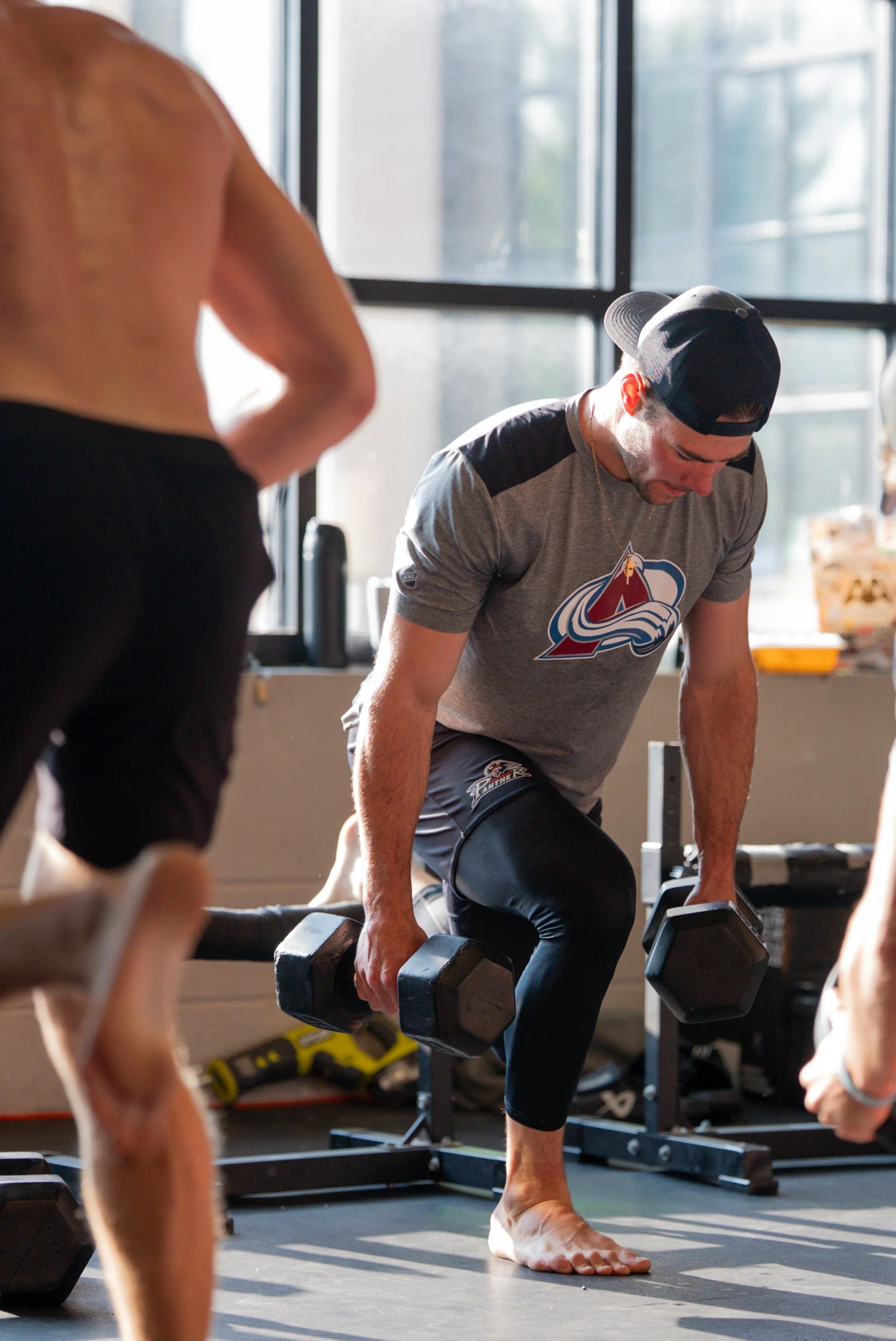
Athlete Spotlight: Peyton Jones
Professional Goaltender | Augsburger Panther, Germany
This summer I got to start working with Peyton Jones, and it's been great from day one. He found his way to KAD through his goaltending coach, Dave Leggio. His wife's from Buffalo, so they're back here for the summer before he heads to Germany for the season.
Peyton's résumé speaks for itself — standout career at Penn State, time in the Colorado Avalanche organization, and now playing pro in Augsburg.
From our first session, two things stood out: his mindset and his athleticism. At his level, it's not about making him "stronger." It's about finding the specific stuff that actually shows up in the crease.
We dug into hip mobility, deceleration, eccentric loading, and goalie-specific plyometrics — basically, his ability to absorb force, redirect it, and explode into position.
What I've loved most is how aligned we are on training. Peyton wants to know the why behind everything, which let us go deep instead of running a generic program. At this level, that precision matters.
Great summer working with him. Excited to see what he does with it back in Augsburg — I expect a big year, and I'm looking forward to staying part of his development.
More athletes like Peyton on The Elite Roster
Roster Watch
Three Athletes Level Up to D1 This Fall
This fall, several longtime KAD athletes head off to play college hockey. Watching athletes I've coached for years develop, earn their shot, and move on to the next level is the most rewarding part of this job.
Niles Benson — Harvard University Six years training with me. His path ran through the Regals and Jr. Sabres, then the Green Bay Gamblers and Muskegon in the USHL. This fall he starts his freshman year at Harvard.
Kayla O'Donnell — Cornell University Also six years in the program. She came up through Amherst, the Knights, and Bishop Kearney before earning her Division I opportunity. She starts at Cornell this fall.
Brandt Dubey — Colgate University Four years with me. His path went from the Jr. Sabres development program to the Minnesota Wilderness (NAHL) and Dubuque Fighting Saints (USHL). This fall, Division I hockey at Colgate.
These are the moments long-term development is built for. I've watched each of these athletes grow, hit setbacks, and keep earning their way up. Proud of what they've put in to get here.
What's New
The new site is live. Take a look — it's a clearer picture of the program, the results, and what's coming next.
Online Coaching: Train From Anywhere
Kaifas Athlete Development continues to offer Online Coaching through CoachRx.
I've had athletes want the same individualized coaching we do at KAD but can't train in person consistently — away at college, playing juniors or pro, traveling, or just outside Buffalo. Online Coaching solves that.
This isn't a template. Every plan is built around the athlete's goals, history, and stage of development. Programming updates weekly and covers:
Individualized strength and performance work
Video demonstrations for every exercise
Mobility prescriptions
Nutrition and behavior coaching
Sleep and routine tracking
Goal setting and progress tracking
Athletes have direct access to me by text or call — no one's left to figure it out alone.
Same philosophy as everything at KAD: coach the individual, not the workout. Performance comes from strength, movement, nutrition, recovery, and consistency — not just the hour of training. Online Coaching puts all of it in one system.
If you want structure and a plan that keeps evolving with you, Online Coaching goes wherever your sport takes you.
On the Blog
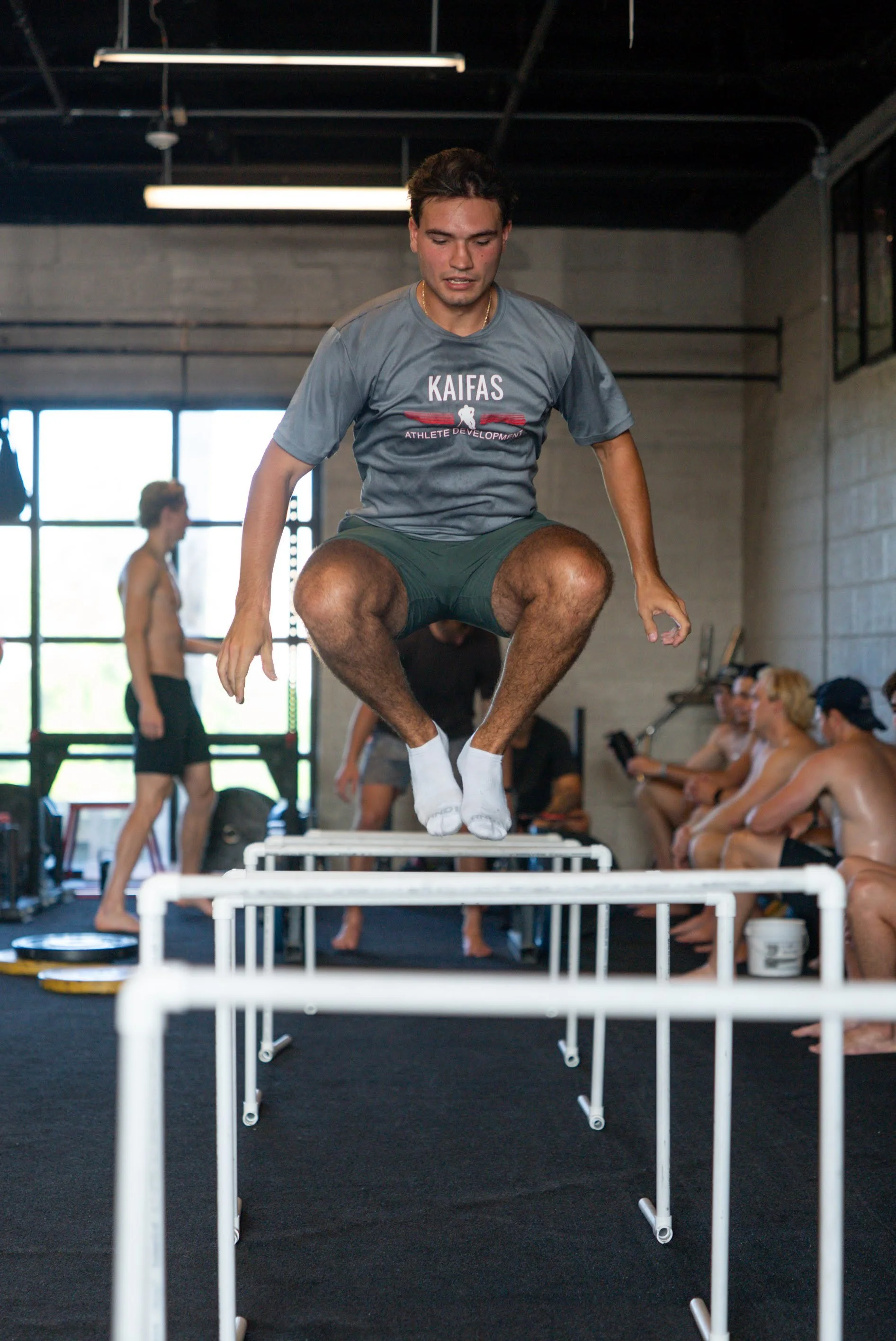
Season's here — practices, games, team workouts. But team training is built for the group, not the individual.
Every athlete's different. Some need strength. Some need mobility, speed, power, or injury-specific work.
In-season isn't about more work. It's the right stimulus at the right time, managed around practices, games, and recovery.
The offseason is where we build hard. The season shouldn't be where we give it back. Athletes who separate themselves don't develop three months a year — they follow a structured, individualized process year-round.
We don't stop developing when the season starts. We adjust and keep building.
Read the full post: Why Individualized In-Season Training Continues to Separate Athletes →
Programs & Partners
Coach to Coach: Ashlea Jones, Athletes in Training
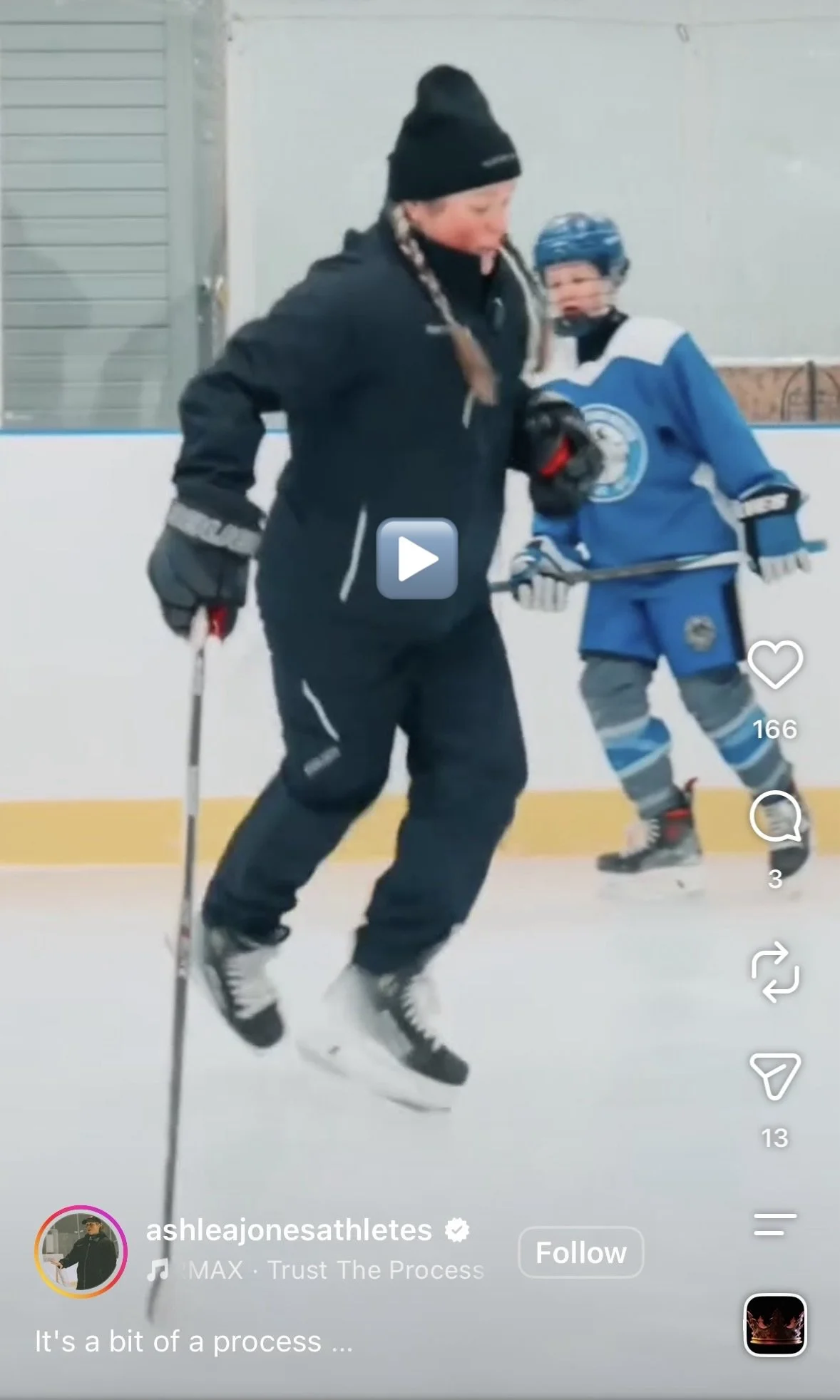
Over 25+ years of coaching, one of the things I've valued most is working with other coaches who share that same commitment. This edition of Coach to Coach: Ashlea Jones, founder of Athletes in Training.
Ashlea's from Oshawa, Ontario, and grew up an elite figure skater before turning that into a career developing hockey players. Her understanding of skating mechanics, edge work, and force production is as advanced as anyone I've worked with.
We started working together about five years ago, when she began coaching Quentin Musty during his first season with the Sudbury Wolves, and it's grown into a real partnership since — connecting what our athletes do in the gym to what they need on the ice. No egos. We trade ideas, learn from each other, and keep the athlete's development as the priority.
Every summer, Ashlea comes to Buffalo to work with our D1, junior, and pro athletes, in between running the Carolina Hurricanes Development Camp — and working with her has made me a better coach. What I've learned from her about skating mechanics has made me far more intentional about how strength, power, mobility, and acceleration in the gym transfer to the ice. Grateful for the partnership.
Getting Electrolytes Right: KAD x LMNT
Electrolyte replenishment is one of the most misunderstood parts of recovery. Rinks feel cold, but they're often humid, and athletes still lose real fluid and sodium during hard sessions — especially over multi-game weekends.
Most "sports drinks" aren't built for that. Gatorade, Powerade, and BodyArmor list electrolytes, but rarely enough to match real sweat losses.
That's why we use LMNT at KAD: 1,000 mg of sodium per packet, plus potassium and magnesium — amounts that actually replace what's lost. We've arranged discounted pricing for KAD families: 30 packets for $30, available through us.
Hydration isn't about drinking more. It's about replacing what your body actually loses.